Health & Fitness
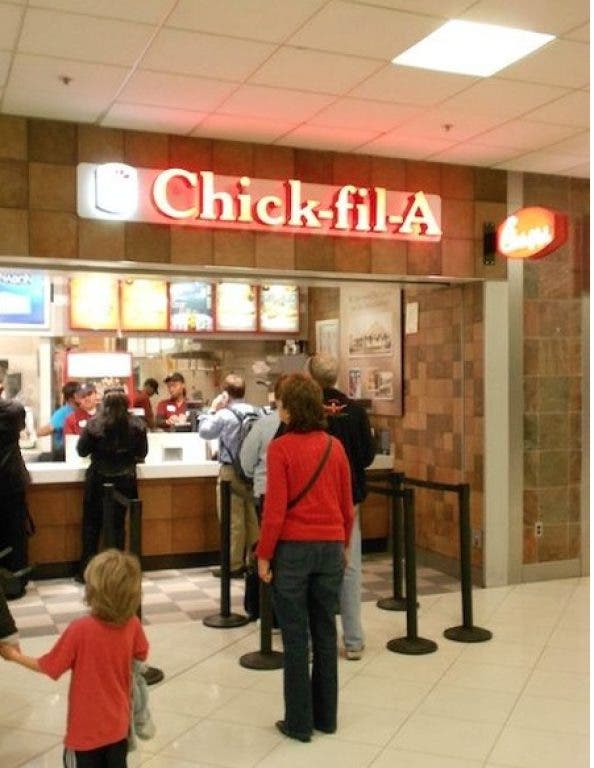
Same-sex marriage: looking beyond "eat mor chikin"
The issue of same-sex marriage is a test of our commitment to the idea of a free society.
At its recent meeting in New Orleans, the Southern Baptist Convention made history by electing its first ever African-American president. However, it was business as usual when it overwhelmingly adopted a resolution saying, “We deny that the effort to legalize ‘same-sex marriage’ qualifies as a civil rights issue since homosexuality does not qualify as a class meriting special protections, like race and gender.”
If the Baptists had said that their religious beliefs prohibit member congregations from recognizing or performing same-sex marriages, their position would be unassailable. But by venturing into the secular realm of civil rights, they open themselves to arguments from which their religious beliefs provide no sanctuary.
Find out what's happening in Athenswith free, real-time updates from Patch.
I’m not going to rehash the arguments that have been aired on this issue to the point of tedium. Having been married to the same woman for forty-four years, I don’t have a dog in this fight. What I want to do instead is suggest that understanding some defining elements of a free society gives us a way of moving beyond food fights featuring chicken sandwiches.
Three aspects of a free society are key here.
Find out what's happening in Athenswith free, real-time updates from Patch.
First, in a free society what the lawyers and political thinkers call “ordered liberty” is a basic value.
Second, while I believe the libertarians get some things wrong, one thing they get right is this: To say that ordered liberty is a basic value means at least that policy initiatives extending liberty are, so to speak, “innocent until proven guilty.” In other words, the burden of proof is always on those who’re opposed to expanding liberty, not on those who favor it.
Third, in order for opponents of some policy extending liberty to “convict” it as a “guilty” one, they have to make a compelling case that the policy will inflict some identifiable harm on people. When I say “identifiable” harm, I mean something more than vague, speculative harms. If ordered liberty is a basic good, then we shouldn’t go around denying it to people on the basis of nothing more than speculations and conjectures about terrible things that’ll happen if competent adults are left free to live as they think fit, consistent with the same liberty for others.
You may disagree, but I don’t think any of this is controversial. These principles just spell out the minimum standards that any society has to meet to qualify as free. To the degree that we flout them, we’re not really committed to the idea of a free society.
If that’s right, these principles tell us something important about how the issue of same-sex marriage should be addressed.
Since it’s a question of fact, not sentiment, whether some policy does anybody any identifiable harm, the ballot box isn’t the best place to evaluate a policy like same-sex marriage. A better forum is one in which advocates pro and con make their cases before an impartial referee enforcing recognized rules of evidence and other procedures ensuring an objective assessment of the key factual claims.
Courts come to mind as venues fitting this description. Whereas voters are free to act on their passions, hunches and anything else that moves them, the parties to a lawsuit aren’t.
States that have banned same-sex marriage by constitutional amendment recognize the difference between those two arenas and have taken this approach precisely to put the issue beyond the dispassionate analysis it would get in the courts.
A now famous example of what happens to the case against same-sex marriage when it’s subjected to this kind of analysis emerged in Perry v. Schwarzenegger. That was the case, tried in federal court for the Northern District of California, challenging the constitutionality of Proposition 8, which asked California voters whether same-sex couples should be allowed to marry in the state. A majority said they shouldn’t.
The judge in the case went out of his way to afford both sides ample opportunity to present their evidence, even allowing the testimony of an “expert” witness opposing same-sex marriage who didn’t qualify as one. In federal court, you’re not an expert just because you say you are. You have to meet certain standards that this witness, one of only two experts testifying against same-sex marriage, didn’t.
But even with this boost from the court, the opponents of same-sex marriage pretty much fell on their faces. One telling exchange occurred during oral argument. When the judge suggested to the opponents’ attorney that “the state’s interest in marriage is procreative” and asked how same-sex marriage damages that interest, at first the attorney tried to dodge the question. But when pressed, he could say only, “Your honor, my answer is: I don’t know. I don’t know.”
Though historically distinct, contrary to the Southern Baptist Convention’s resolution, Jim Crow laws and prohibitions against same-sex marriage both test our commitment to ordered liberty as the bedrock of a free society. Just as the burden was on the segregationists to show why the liberties they enjoyed shouldn’t be extended to African-Americans, the burden is on same-sex marriage opponents to show what actual, identifiable harm will be done if the freedom to marry is extended to same-sex couples. If, in a free society, the burden of proof is always on those opposed to extensions of liberty, “I don’t know” doesn’t come even remotely close to discharging that burden.